A Toe-Biter on the Beach: Madeline Island, November 1, 2026

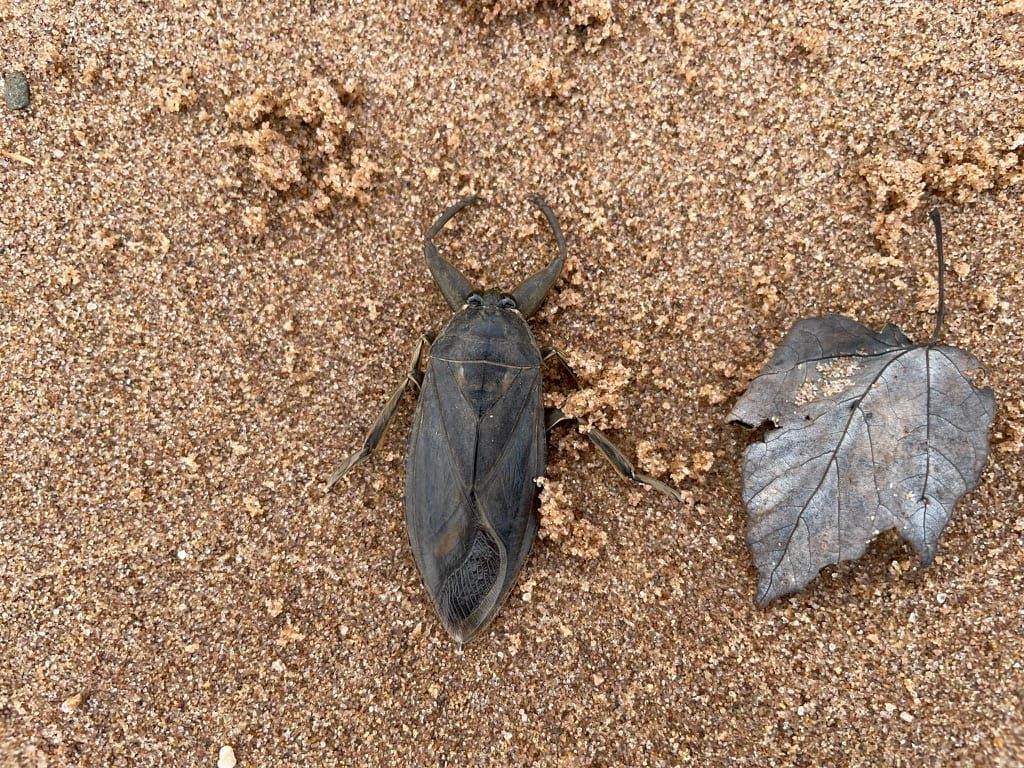
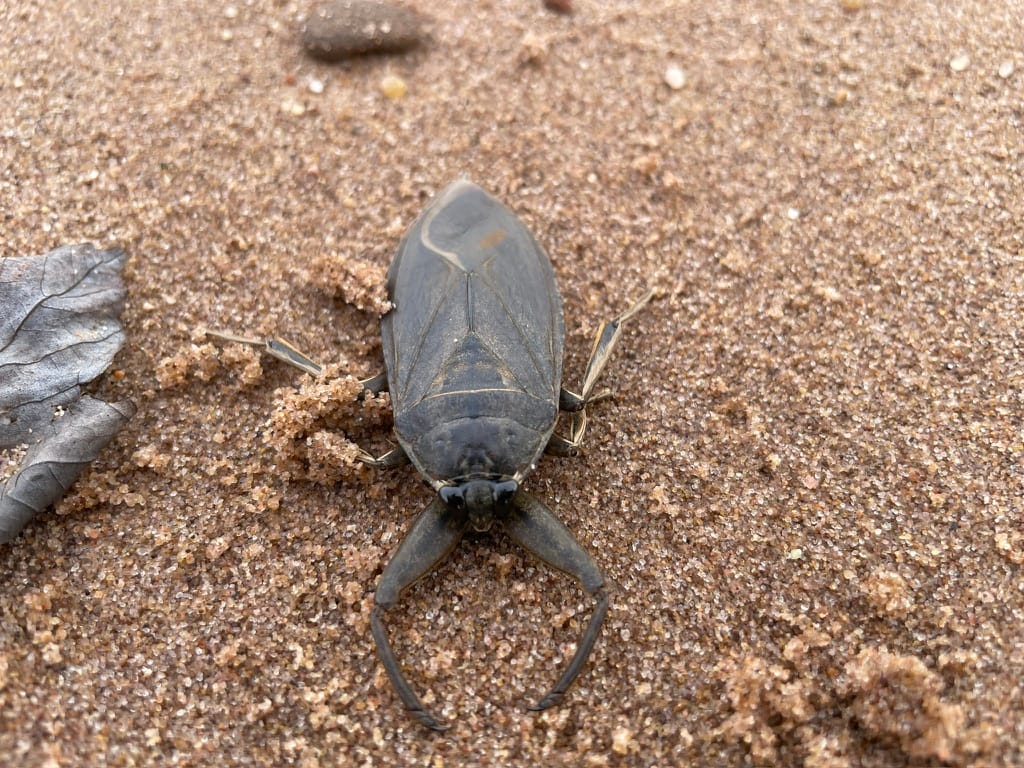
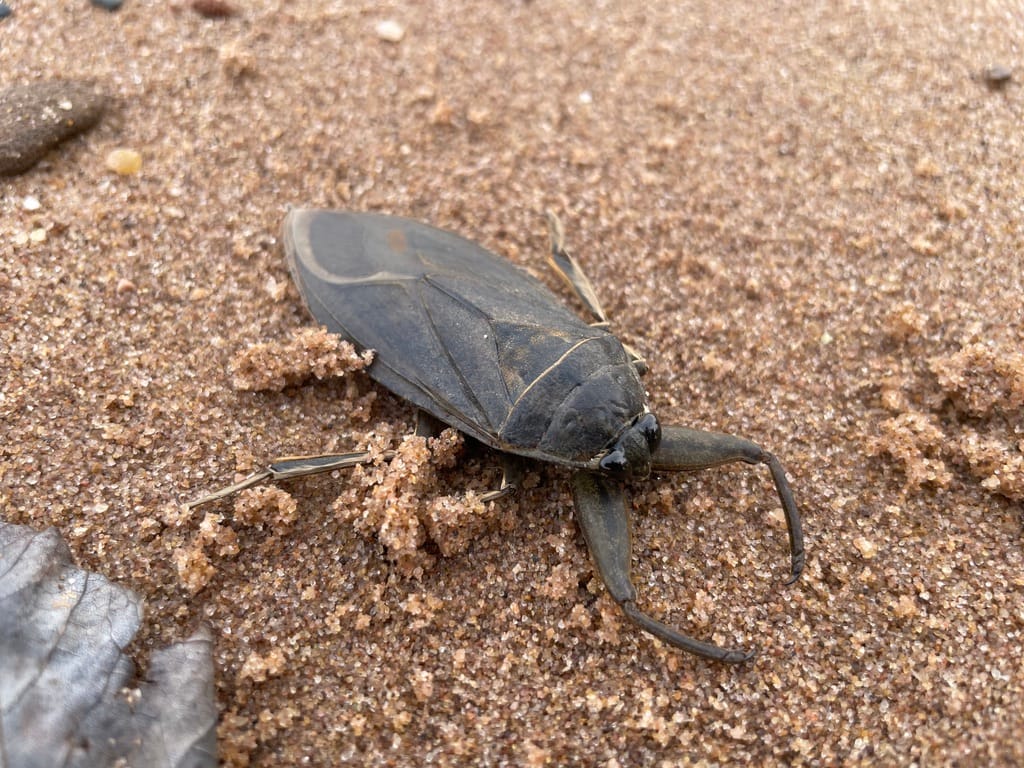
Last weekend we took the ferry from Bayfield, WI, to Madeline Island (in the Apostle Islands). While walking the shoreline, we found this prehistoric-looking insect sitting in the wet sand, and we had no idea what it was. It was large, 2" long and 3/4" wide, and looked like a gigantic cockroach with claws.
A bit of research revealed that it’s probably a giant water bug, Lethocerus Americanus, which is native to southern Canada and the northern U.S. and goes by the names of: “electric light bug,” and “toe biter."
The front legs are built for seizing prey and they are aggressive predators of fish, amphibians, snails, and crustaceans. After clutching their prey, they stab it with their rostrum (beak) and inject saliva full of digestive enzymes that liquefy the tissue, then they suck out what’s left. Apparently, their bite is extremely painful (but typically not damaging) to humans. People sometimes pick up a “dead” one and get bitten when it comes back to life. This one looked dead at first but reacted when I wiggled a leaf in front of it.
Their usual habitat is ponds, marshes, and the edges of lakes and slow-moving streams. They survive the winter by burrowing under mud and leaf matter. Very cool creature.
References
- Wikipedia, “Lethocerus americanus”: https://en.wikipedia.org/wiki/Lethocerus_americanus
- Wikipedia, “Belostomatidae”: https://en.wikipedia.org/wiki/Belostomatidae